
How To
Journal Types: Journals and Advisor Journals
CCH Accounts Production
Journals types for Journals and Advisor Journals, differences and what they mean.
Journal types
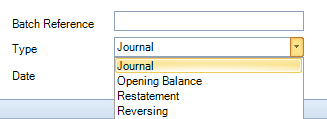
- Journal - these journals are standard journal entries to debit or credit accounts in the current accounting period.
- Opening Balance journals are normally automatically generated by the system when you carry out a year end procedure to balance forward to the new accounting period. The system creates the opening balance journals required to record balance brought forward from the previous accounting period. You may also use these journals to enter opening balances, if this is the first accounting period you are processing for the client.
- Restatement journals are used for prior year adjustments to change the comparative column within the current year. The system draws the comparative TB data from the prior accounting period, however, if you need to restate comparatives in the current period, normally, you would not wish to open the prior period to do so. The restatement journal allows you to make entries that will adjust the comparative data shown for the accounting period in which the journals are processed. They do not affect the current period balances, just the comparative balances, nor do they affect the closed prior period.
- Reversing journals allow you to enter transactions that will be reversed in the next accounting period, e.g. an accrual or prepayment. Entries in the next period reversing the journals made using this type will automatically be generated when you close a reporting period or carry out a year end balance forward.
Advisor Journal types
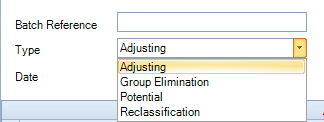
- Adjusting - these journals are standard journal entries to debit or credit accounts in the accounting period.
- Group elimination - these journals are used when eliminating transactions within a group, using this label makes it easier to search/sort.
- Potential - allows for a what-if scenario.
- Reclassification - these journals are used when reclassifying items, e.g. movements on fixed assets, using this label makes it easier to search/sort.
Related documents
CCH Accounts Production/iXBRL essentials training online (10133804)/(10133819)
This document outlines a course on using CCH Accounts Production software, aimed at helping new users efficiently produce statutory accounts. The course includes 1 x 2 hour session and 1 x 3 hour session focusing on practical skills such as setting up accounting periods, importing trial balances, and navigating the software. It is designed for all employees involved in preparing statutory accounts. Training is conducted in an interactive environment called CloudShare, with additional resources available online for further learning and support.
CCH Accounts Production: essentials training online (10133819)
This document outlines a course on using CCH Accounts Production software, aimed at helping new users efficiently produce statutory accounts. The course includes two 2-hour sessions focusing on practical skills such as setting up accounting periods, importing trial balances, and navigating the software. It is designed for all employees involved in preparing statutory accounts. Training is conducted in an interactive environment called CloudShare, with additional resources available online for further learning and support.
CCH Accounts Production 2026.3 Hotfix: Release Notes
Release Notes for CCH Accounts Production 2026.3 Hotfix
CCH Accounts Production 2026.3: Release Notes
Release Notes for CCH Accounts Production 2026.3
CCH Accounts Production 2026.2: Release Notes
Release Notes for CCH Accounts Production 2026.2